Original: $24.13
-65%$24.13
$8.45The Story
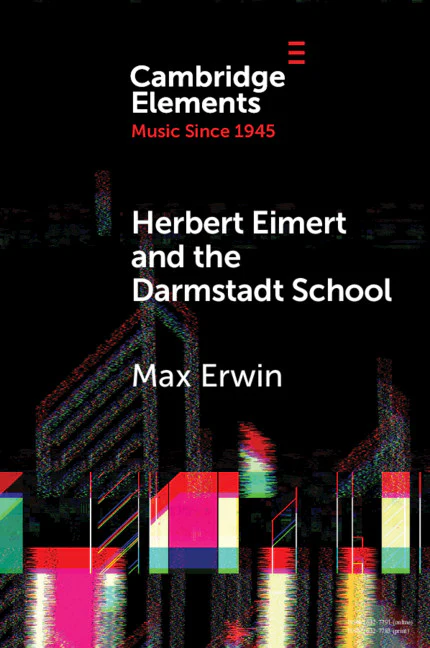
After 1951, the discourse surrounding both the Darmstadt courses in particular and European New Music more broadly shifted away from a dodecaphonic vocabulary in favour of concepts such as 'punctual music', 'post-Webern music', and 'static music', all collected under the newly-christened unity of the Darmstadt School. This study proposes a genealogy of the Darmstadt School through the institutional influence and writings of Herbert Eimert. It demonstrates that Eimert's understanding of music history - whereby technical procedures are universalised as the acme of historical progress - was adopted as the institutional discourse of New Music in Europe, and remains central to both textbook and critical scholarly accounts which attempt to make sense of the avant-garde after World War II.
Description
After 1951, the discourse surrounding both the Darmstadt courses in particular and European New Music more broadly shifted away from a dodecaphonic vocabulary in favour of concepts such as 'punctual music', 'post-Webern music', and 'static music', all collected under the newly-christened unity of the Darmstadt School. This study proposes a genealogy of the Darmstadt School through the institutional influence and writings of Herbert Eimert. It demonstrates that Eimert's understanding of music history - whereby technical procedures are universalised as the acme of historical progress - was adopted as the institutional discourse of New Music in Europe, and remains central to both textbook and critical scholarly accounts which attempt to make sense of the avant-garde after World War II.