Original: $24.13
-65%$24.13
$8.45The Story
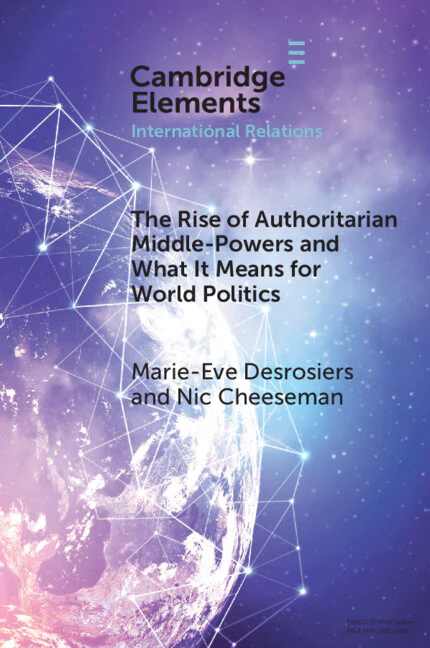
In recent years, a group of influential authoritarian states has emerged that fall between the ranks of great powers and small states. These authoritarian middle-powers – such as Türkiye and the United Arab Emirates – exert considerable influence, particularly in their region. Yet this development has been overlooked in favor of a focus on superpowers, especially China and Russia. We therefore lack a framework for understanding their behavior and impact. This Element offers the first comprehensive analysis of how non-democratic middle-powers engage abroad. Drawing on critical case studies, it shows how the combination of authoritarian politics and mid-level status leads to distinctive foreign policies. In particular, these strategies erode global democratic norms and institutions through a combination of hard power and transnational repression tempered by hedging and legitimation strategies. In this way, authoritarian middle-powers are helping to unravel the liberal rules-based order. This title is available as Open Access on Cambridge Core.
Description
In recent years, a group of influential authoritarian states has emerged that fall between the ranks of great powers and small states. These authoritarian middle-powers – such as Türkiye and the United Arab Emirates – exert considerable influence, particularly in their region. Yet this development has been overlooked in favor of a focus on superpowers, especially China and Russia. We therefore lack a framework for understanding their behavior and impact. This Element offers the first comprehensive analysis of how non-democratic middle-powers engage abroad. Drawing on critical case studies, it shows how the combination of authoritarian politics and mid-level status leads to distinctive foreign policies. In particular, these strategies erode global democratic norms and institutions through a combination of hard power and transnational repression tempered by hedging and legitimation strategies. In this way, authoritarian middle-powers are helping to unravel the liberal rules-based order. This title is available as Open Access on Cambridge Core.